
Dallas Small Business Tax Accountant AlternativeClose one month, then the return
We keep the books for one small company, set payroll up so payday has a path, and prepare the return once a month matches the bank. Steven Palmieri is the Tax CFO on your file, and the work on this page is one named month for one company.
Steven Palmieri, the Entrepreneur's CFO.
Name this monthYou do not need a year of clean books to start. Name one month, the last one you trust, and we close it. Every month after that follows the same path.
In Dallas, about 82 percent of businesses employ fewer than 20 people. One month at a time is how a drawer becomes a file.
Name one month

You will be talking to the Steven Palmieri practice.

From Steven Palmieri
The Tax CFO way with one company.
A tax accountant files what the year produced. The Tax CFO closes the months as they happen and tells you, while the year is still open, what your pay, a purchase and the company's tax shape could change. Small companies get that question least and need it most.


The open month
The month we name is the one a deposit can still be tied to. We start there, not from a year with no month in it.
Click to see the year ›Tap to see the year ›
The tax return
The return is built from months already closed, so there is nothing to reconstruct in March.
Click to read the return ›Tap to read the return ›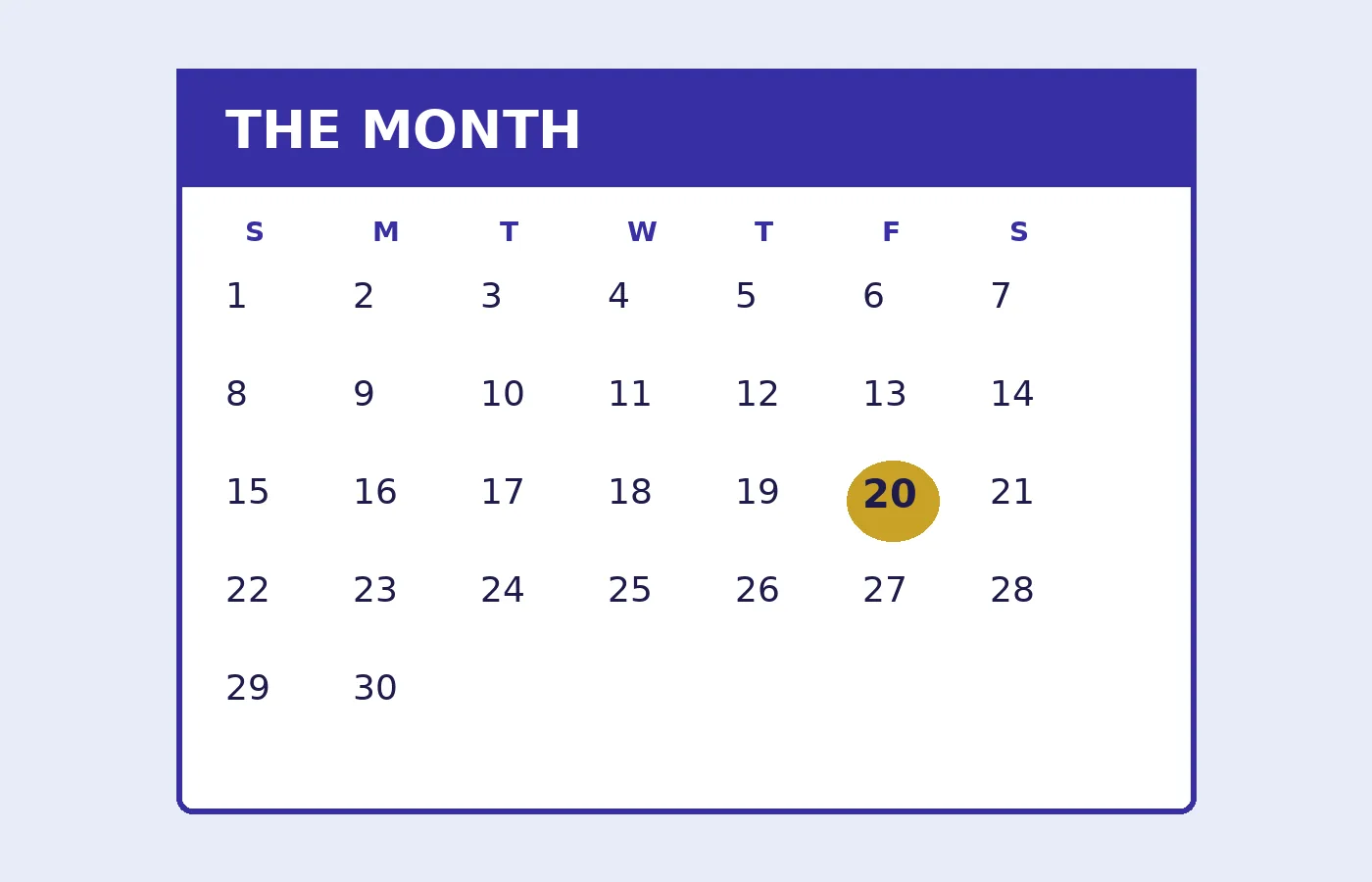
The public dates
The 20th, the April rendition and the May report arrive whether the company is small or not. They come off a closed month.
Click to see the dates ›Tap to see the dates ›
Payday stays yours
We put payroll setup in place. Payday stays on your side. The question page writes that split in plain words.
Click to ask about payday ›Tap to ask about payday ›
What this one company already has
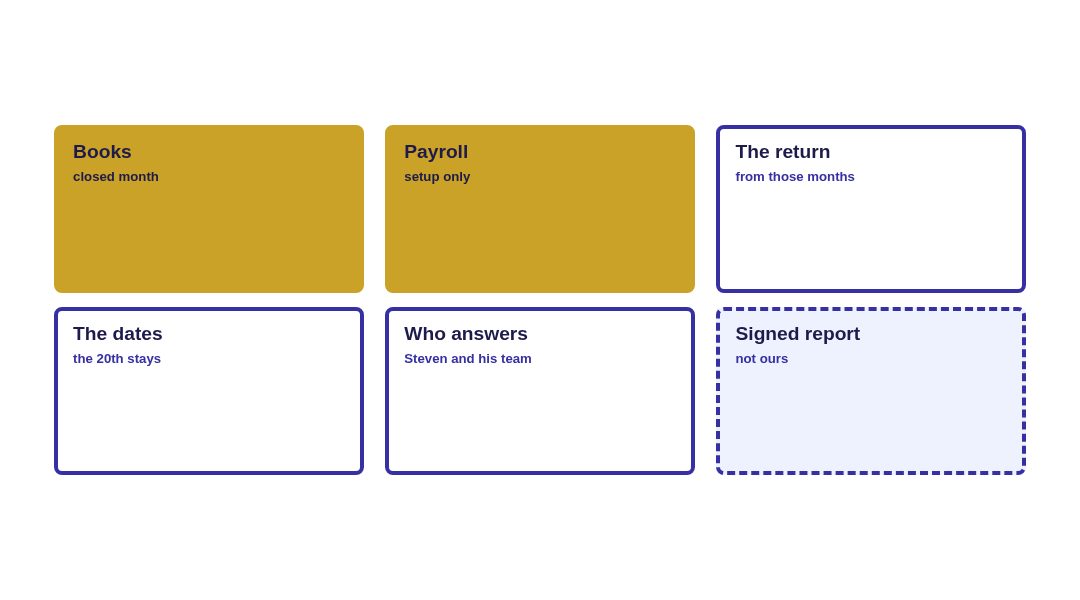
Five boxes are filled. The dashed box stays empty.
The ownerRuns the companyHere
You still sign the checks and pick the work. We read the month beside you, and we do not take the company over.
PaydayStays with youHere
Payroll setup on this file means the first payday has a path. Once that path exists, payday stays in your hands, and this practice does not cut the checks.
The monthWe close itHere
One company gets one named month. We tie that month to the bank before the conversation ever widens to the whole year.
The statementsWe prepare themHere
The statements and the reports come from the month that already matches the bank. A pretty page with open items is not a statement we will hand you.
The returnWe prepare itHere
The filing draft on this chart waits until every named month has been tied to the bank. Nothing on this card quotes a refund.
A signed reportAudit or reviewMissing
This box stays empty on purpose. The empty box is the opinion letter a lender sometimes wants. We do not sign that letter. We will name the kind of firm that does.
Named on the chart
Steven Palmieri, a Tax CFO, carries the Entrepreneur's CFO name here. Steven and his team close the month with you.
What the first month includes
You pick the month by pointing at the last one the bank still agrees with. It may be last month, or the month you are standing in. We do not start with a speech about the whole year. Payroll setup belongs in that same month. After that setup, you still run payday on the day you already use.
Inside that month we want the deposits, the bills you already paid, and the payroll setup if people are being paid. If a receipt is missing we say so, and that line stays blank. A guess typed in to pretty the month is something we will not do.
A company this size can still have a full year of dates. The month is how we keep those dates from arriving as a surprise. When the month ties, the statements have something true to stand on.
When the tax may be zero
A small company can sit under the franchise line and still be required to send the report. Zero tax is a result on the form. It is not permission to skip the filing. We prepare that report from the month we closed.
The dates page already prints a no-tax line of 2,650,000 dollars for this report. Retail and wholesale are published at 0.375 percent there. Other business is published at 0.75 percent. Years 2026 and 2027 still leave on 15 May when the computed tax is zero. The closed month is what that report stands on.
If your revenue sits under the line, we still want the month named. A blank year is harder to defend than a year built from one closed month at a time.
What we will not sign
Some lenders want an opinion letter on the statements. That letter is the empty box on the chart above. We name the limit before the call, so you do not spend it hoping for a signature we cannot give.
What stays here is monthly books, payroll setup, statements, reports, and the return. Clean numbers are why the month exists. A signature this practice cannot give is not something we pretend to offer.
The dashed box is the short limit. The disclosures page holds the long one. If that limit is the only thing you needed, you can leave with a clear no.
Places we share
The State Fair fills Fair Park for 24 days from the last Friday in September, and we enjoy those days the way you do. When we look at those grounds we also wonder what a small company's books did during the same stretch. The month we named does not pause for the fair.
A blue norther rolls through under a dark sky, and we feel that drop the same afternoon you do. The statement in front of you does not warm up when the air does. That named month still closes on the day we set.
The public school calendar most families follow here is the second largest district calendar in the state, and we plan the 20th around those first days with you. A teacher workday does not give a small company a later sales report.
The restored streetcar through Uptown links the Arts District with West Village, and we ride it when an errand of our own runs that way. The ride is a pleasure we share with you. It does not name the month, and the month still has to close.
Hand us the month
Write the month you still trust.
You will be talking to the Steven Palmieri practice.
Also on this site. The year, The return, Meet Steven